


Professor Robert Fishman, author of "The Fifth Migration", argues that Americans' rediscovery of inner cities will give even troubled cities like Detroit a major boost.


"Fishman said while Detroit lags behind virtually all of big-city America in experiencing a rebirth, he believes the city will, someday, see its long hoped-for renaissance.
The return to cities is a powerful trend, Fishman said, 'and as expectations of urban living rise...this is going to come to Detroit as well.'
"Fishman is hardly predicting the return of the manufacturing economy that made Detroit one of the world's most dynamic cities during the first 50 years of the 20th Century. He is talking about simple urbanity -- a lively street with diverse stores and apartments on which people can enjoy the best that high-density living has to offer."
"Fishman said Detroit is perhaps the 'most challenged' city and region in the nation, but he noted that while many experts believed New York was trapped in a terminal crisis in the 1970s, the city today is booming."
"What has happened in other cities will happen in Detroit, Fishman said."
FULL STORY: As people rediscover inner cities, will Detroit be next?

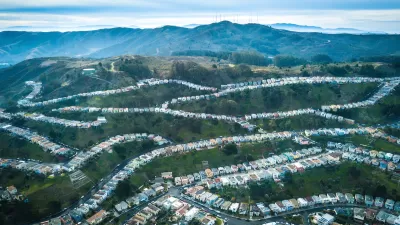
Depopulation Patterns Get Weird
A recent ranking of “declining” cities heavily features some of the most expensive cities in the country — including New York City and a half-dozen in the San Francisco Bay Area.
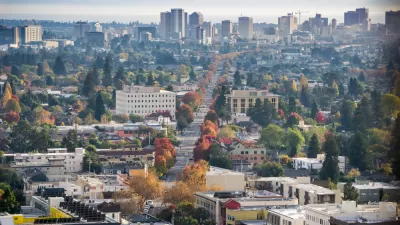
California Exodus: Population Drops Below 39 Million
Never mind the 40 million that demographers predicted the Golden State would reach by 2018. The state's population dipped below 39 million to 38.965 million last July, according to Census data released in March, the lowest since 2015.
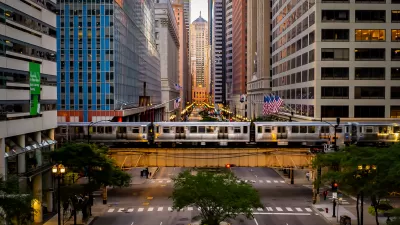
Chicago to Turn High-Rise Offices into Housing
Four commercial buildings in the Chicago Loop have been approved for redevelopment into housing in a bid to revitalize the city’s downtown post-pandemic.

How California Transit Agencies are Addressing Rider Harassment
Safety and harassment are commonly cited reasons passengers, particularly women and girls, avoid public transit.

Significant Investments Needed to Protect LA County Residents From Climate Hazards
A new study estimates that LA County must invest billions of dollars before 2040 to protect residents from extreme heat, increasing precipitation, worsening wildfires, rising sea levels, and climate-induced public health threats.

Federal Rule Raises Cost for Oil and Gas Extraction on Public Lands
An update to federal regulations raises minimum bonding to limit orphaned wells and ensure cleanup costs are covered — but it still may not be enough to mitigate the damages caused by oil and gas drilling.
City of Costa Mesa
Licking County
Barrett Planning Group LLC
HUD's Office of Policy Development and Research
Mpact Transit + Community
HUD's Office of Policy Development and Research
City of Universal City TX
ULI Northwest Arkansas
City of Laramie, Wyoming

Urban Design for Planners 1: Software Tools
This six-course series explores essential urban design concepts using open source software and equips planners with the tools they need to participate fully in the urban design process.
Planning for Universal Design
Learn the tools for implementing Universal Design in planning regulations.
