


Realtors' report shows double-digit increase in housing prices in 14 metro areas, despite national decrease; high values attributed to affordability, job growth.


"Affordable housing and booming job markets have helped some metros buck the national trend of stagnant home prices"
"Even as national home prices saw their worst-ever decline last quarter, the median home price in the Atlantic City (N.J.) area shot up almost 26%, to $339,800, marking the sharpest year-over-year increase of any U.S. metropolitan area. Seventy-one other U.S. metro areas saw price gains in the fourth quarter of 2006 from a year earlier, including 14 metros with increases of 10% or more, according to a Feb. 15 report from the National Association of Realtors (NAR)."
"Five metro areas remained unchanged and 73 areas had price declines, contributing to an overall U.S. median home price drop of 2.7%, to $219,300, the biggest year-over-year decrease on record. Home prices in the Sarasota (Fla.) area fell 18%, the sharpest decline among the metro areas."
"Areas such as the Florida coast and Southern California saw the most speculation and consequently the most rapid price runups in the boom years. Places that didn't experience dramatic price appreciation until recently, including Atlantic City, Salt Lake City, Texas, and the Pacific Northwest, remained relatively affordable last year, drawing buyers and sending prices skyward."
"Economic law isn't the only factor driving home price gains in many metro areas. More than $2 billion in new construction in Atlantic City, including casinos, megaresorts, and shopping centers, is now attracting a "yuppie" crowd, according to Drew Fishman, president elect of NJAR and an Atlantic County-based realtor."
"Job creation also led to significant home price appreciation in some metro areas last year, especially in the Northwest states. Three Oregon metros-Salem, Portland, and Eugene-and two Washington metros-Seattle and Spokane-saw double-digit price growth in the fourth quarter of 2006."
"Our market just seems to keep chugging along," says Terry Miller, a realtor at Seattle-based Coldwell Banker Bain. In 2006, Seattle began a major redevelopment of its South Lake Union neighborhood to attract more biotech companies to the city. A large and increasing immigrant population in the Seattle area has also helped create demand for housing, Miller says. In addition, the Northwest region's price increases in recent years have not been as significant as in other parts of the U.S."
"Maybe the slump in national home prices isn't the housing market's biggest problem, as evidenced by the positive price changes in nearly half of the nation's metro areas. In fact, problems may just be starting for areas like Seattle, which could see prices get out of control. "Prices are so high now, it is a concern," says Miller."
FULL STORY: Housing Bust Rebels

Depopulation Patterns Get Weird
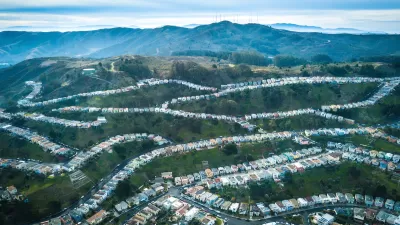
A recent ranking of “declining” cities heavily features some of the most expensive cities in the country — including New York City and a half-dozen in the San Francisco Bay Area.
California Exodus: Population Drops Below 39 Million
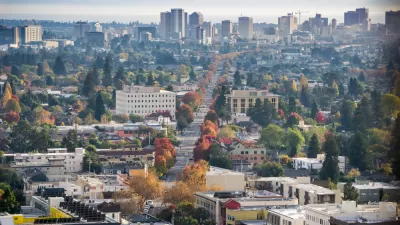
Never mind the 40 million that demographers predicted the Golden State would reach by 2018. The state's population dipped below 39 million to 38.965 million last July, according to Census data released in March, the lowest since 2015.

Chicago to Turn High-Rise Offices into Housing
Four commercial buildings in the Chicago Loop have been approved for redevelopment into housing in a bid to revitalize the city’s downtown post-pandemic.

Ohio Lawmakers Propose Incentivizing Housing Production
A proposed bill would take a carrot approach to stimulating housing production through a grant program that would reward cities that implement pro-housing policies.

Chicago Awarded $2M Reconnecting Communities Grant
Community advocates say the city’s plan may not do enough to reverse the negative impacts of a major expressway.

New Park Opens in the Santa Clarita Valley
The City of Santa Clarita just celebrated the grand opening of its 38th park, the 10.5-acre Skyline Ranch Park.
City of Costa Mesa
Licking County
Barrett Planning Group LLC
HUD's Office of Policy Development and Research
Mpact Transit + Community
HUD's Office of Policy Development and Research
City of Universal City TX
ULI Northwest Arkansas
Town of Zionsville

Urban Design for Planners 1: Software Tools
This six-course series explores essential urban design concepts using open source software and equips planners with the tools they need to participate fully in the urban design process.
Planning for Universal Design
Learn the tools for implementing Universal Design in planning regulations.
