


Wendell Cox and Ronald Utt suggest that smart growth abuses are creating a "Rent Belt" of high-Cost areas.


Housing affordability problems are concentrated in regions where anti-growth land-use regulations have limited the supply of building lots, according to the report.
"High-cost housing encourages business and households to move elsewhere and undermines the regional economy. The solution is to attack the root cause of the affordability problem (restrictive land-use regulations) and increase the supply of building lots."
From the conclusion:
"A better solution is to attack the root cause of the affordability problem-restrictive land-use regulations-and increase the supply of building lots. If such a policy were implemented in any of the impacted areas, home prices in now-unaffordable regions like Los Angeles, Washington, New York City, and Miami would begin to return to affordable levels. Efforts to turn back such regulations are underway in a number of communities. The most notable is a recent ballot box victory that forced Oregon to relax its regulations.
The overly regulated metropolitan areas seem likely to experience considerably less population and economic growth in the future than would have occurred if their land-use policies had not broken the historic relationship between house values and household incomes. To restore higher levels of economic growth, such areas will need to liberalize their land-use policies.
In the meantime, affordable metropolitan areas that have not grown as strongly in recent decades face a unique opportunity for renewal and expansion. Such areas-many in the long-dormant Midwest-will need to ignore the siren song of excessive land-use regulation to take advantage of their potential."
FULL STORY: Housing Affordability: Smart Growth Abuses Are Creating a "Rent Belt" of High-Cost Areas

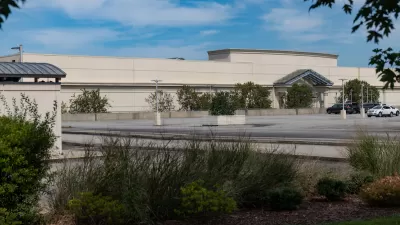
Pennsylvania Mall Conversion Bill Passes House
If passed, the bill would promote the adaptive reuse of defunct commercial buildings.

Coming Soon to Ohio: The Largest Agrivoltaic Farm in the US
The ambitious 6,000-acre project will combine an 800-watt solar farm with crop and livestock production.
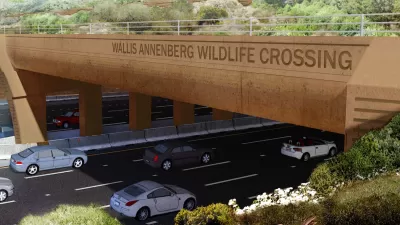
World's Largest Wildlife Overpass In the Works in Los Angeles County
Caltrans will soon close half of the 101 Freeway in order to continue construction of the Wallis Annenberg Wildlife Crossing near Agoura Hills in Los Angeles County.

California Grid Runs on 100% Renewable Energy for Over 9 Hours
The state’s energy grid was entirely powered by clean energy for some portion of the day on 37 out of the last 45 days.

New Forecasting Tool Aims to Reduce Heat-Related Deaths
Two federal agencies launched a new, easy-to-use, color-coded heat warning system that combines meteorological and medical risk factors.

AI Traffic Management Comes to Dallas-Fort Worth
Several Texas cities are using an AI-powered platform called NoTraffic to help manage traffic signals to increase safety and improve traffic flow.
City of Costa Mesa
Licking County
Barrett Planning Group LLC
HUD's Office of Policy Development and Research
Mpact Transit + Community
HUD's Office of Policy Development and Research
Tufts University, Department of Urban and Environmental Policy & Planning
City of Universal City TX
ULI Northwest Arkansas

Urban Design for Planners 1: Software Tools
This six-course series explores essential urban design concepts using open source software and equips planners with the tools they need to participate fully in the urban design process.
Planning for Universal Design
Learn the tools for implementing Universal Design in planning regulations.
