


How to adequately plan for cities in decline is a growing problem that has received little attention.


Smaller industrial cities, located mostly in the Northeast and around the Great Lakes, are finding it almost impossible to recover from the decline of their manufacturing employment base. San Francisco, Boston and Chicago can prosper in the 21st century as cultural and entertainment enters with concentrated office and retail activity and strong downtown residential growth. Elmira, Flint and Youngstown can't realistically nurture any such hopes.
The problem of shrinking industrial cities is attracting fresh interest in academic circles and new attention abroad. Since the Berlin Wall came down, factory towns in eastern Germany and the former Soviet Union have been emptying out, forcing governments there to grapple with industrial and residential decay. Closer to home, a shrinking cities exhibit currently on tour in Europe is set to arrive in New York next month and in Detroit in February. Also in February, the Institute of Urban and Regional Development at the University of California, Berkeley, is hosting a symposium on the topic.
The urban planning profession is not well equipped to handle shrinkage, either. Planning literature is fundamentally oriented toward growth and how to manage it.
Thanks to Karina Pallagst

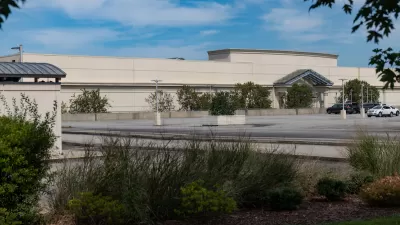
Pennsylvania Mall Conversion Bill Passes House
If passed, the bill would promote the adaptive reuse of defunct commercial buildings.

Planning for Accessibility: Proximity is More Important than Mobility
Accessibility-based planning minimizes the distance that people must travel to reach desired services and activities. Measured this way, increased density can provide more total benefits than increased speeds.
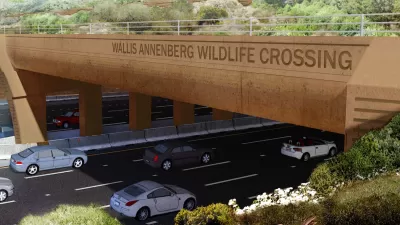
World's Largest Wildlife Overpass In the Works in Los Angeles County
Caltrans will soon close half of the 101 Freeway in order to continue construction of the Wallis Annenberg Wildlife Crossing near Agoura Hills in Los Angeles County.

Eviction Looms for Low-Income Tenants as Rent Debt Rises
Nonprofit housing operators across the country face almost $10 billion in rent debt.

Brightline West Breaks Ground
The high-speed rail line will link Las Vegas and the Los Angeles area.

Colorado Bans No-Fault Evictions
In most cases, landlords must provide a just cause for evicting tenants.
City of Costa Mesa
Licking County
Barrett Planning Group LLC
HUD's Office of Policy Development and Research
Mpact Transit + Community
HUD's Office of Policy Development and Research
Tufts University, Department of Urban and Environmental Policy & Planning
City of Universal City TX
ULI Northwest Arkansas

Urban Design for Planners 1: Software Tools
This six-course series explores essential urban design concepts using open source software and equips planners with the tools they need to participate fully in the urban design process.
Planning for Universal Design
Learn the tools for implementing Universal Design in planning regulations.
