


Despite its booming growth and the recent announcement of a world-class office tower, downtown Calgary is suffering from a lack of human-scale planning, writes Lisa Rochon.


"Walk around [downtown] Calgary -- dare to abandon your car -- in order to appreciate how mean the streets have become. The city is defined by urban parsimony.
Instead of parks or courtyards designed to allow people to bask in the big Alberta sun, there is a formidable system of one-way streets and towers that come down hard to the edge of the street. It's no wonder only 30,000 people call centre city their home. Since the 1960s, the above-ground system of walkways that connects buildings in the downtown has further undermined the basic fact that any dynamic city requires foot traffic at street level.
...The centre city communities accounted for almost half of all personal and property crimes in Calgary, compared with 23 per cent of Toronto's total crimes that are committed in its downtown. In an oil-rich city like Calgary with a young population of highly educated, hard-working engineers, there isn't a lot of time or interest for those who are left behind. There were 2,597 homeless people enumerated in 2004 by the city-sponsored count of homeless persons. Sweeping the homeless into shelters -- there are 43 such facilities in the downtown -- is hardly the answer.
In boom time, the tendency is for Calgary to go on automatic pilot and build towers. In order to accommodate a flood of people wanting to work and live in the downtown, the projection is for more than 100 30-storey condominium towers and about 20 new 30-storey office towers by 2025. But too many towers will further depersonalize the city centre. Without credible alternatives to the suburbs, such as low-scale dev elopments animated by new public space, cafés andretail, Calgary's downtown will die a slow, heart-stopping death."
FULL STORY: Time to get tough on Cowtown

Depopulation Patterns Get Weird
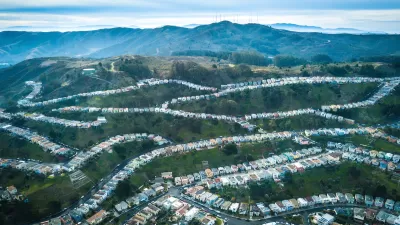
A recent ranking of “declining” cities heavily features some of the most expensive cities in the country — including New York City and a half-dozen in the San Francisco Bay Area.
California Exodus: Population Drops Below 39 Million
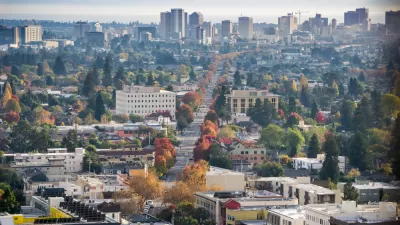
Never mind the 40 million that demographers predicted the Golden State would reach by 2018. The state's population dipped below 39 million to 38.965 million last July, according to Census data released in March, the lowest since 2015.
Chicago to Turn High-Rise Offices into Housing
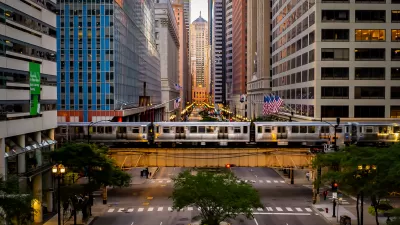
Four commercial buildings in the Chicago Loop have been approved for redevelopment into housing in a bid to revitalize the city’s downtown post-pandemic.

EV Infrastructure Booming in Suburbs, Cities Lag Behind
A lack of access to charging infrastructure is holding back EV adoption in many US cities.

Seattle Road Safety Advocates Say Transportation Levy Perpetuates Car-Centric Status Quo
Critics of a proposed $1.3 billion transportation levy say the package isn’t enough to keep up with inflation and rising costs and fails to support a shift away from car-oriented infrastructure.

Appeals Court: California Emissions Standards Upheld
The U.S. Environmental Protection Agency and the California Air Resources Board, the nation's two most powerful environmental regulatory agencies, won an important round in federal court last week. But the emissions standards battle may not be over.
Barrett Planning Group LLC
City of Cleburne
KTUA Planning and Landscape Architecture
HUD's Office of Policy Development and Research
Mpact Transit + Community
HUD's Office of Policy Development and Research
City of Universal City TX
ULI Northwest Arkansas
City of Laramie, Wyoming

Urban Design for Planners 1: Software Tools
This six-course series explores essential urban design concepts using open source software and equips planners with the tools they need to participate fully in the urban design process.
Planning for Universal Design
Learn the tools for implementing Universal Design in planning regulations.
