


This article by the director of the University of Pennsylvania's School of Design identifies some of the major issues surrounding development along the shores of the Delaware River in Philadelphia, and calls on the public to become involved in improving the area.


The University of Pennsylvania's Harris M. Steinberg announced a collaboration with the Philadelphia Planning Commission to hold a series of public forums to increase public awareness and hear public concerns about the redevelopment process.
"The more than seven-mile strip of waterfront that runs from Allegheny Avenue south to Oregon Avenue abuts some of the densest, oldest and most historic sections of Philadelphia. In recent years, it has experienced some of the city's most explosive growth, and a quick glance at the current development landscape is not pretty."
"Towering condominiums with in-your-face raised parking structures; squat, sprawling chain stores that hug the water's edge ringed with oceans of parking; and the specter of possibly two faceless casinos the size of four football fields each (parking would cover an additional 60 fields) have concerned citizens rightly up in arms. Traffic is already a nightmare on parts of Delaware Avenue. Add in that there are only three points of public access to the river's edge along the entire seven-mile stretch, and you have the starting point for an important civic conversation."
FULL STORY: Involving public in waterfront plan

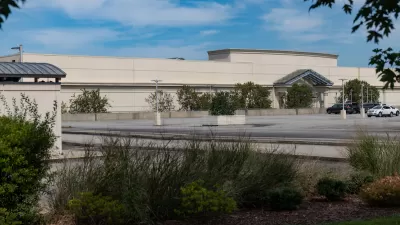
Pennsylvania Mall Conversion Bill Passes House
If passed, the bill would promote the adaptive reuse of defunct commercial buildings.

Coming Soon to Ohio: The Largest Agrivoltaic Farm in the US
The ambitious 6,000-acre project will combine an 800-watt solar farm with crop and livestock production.
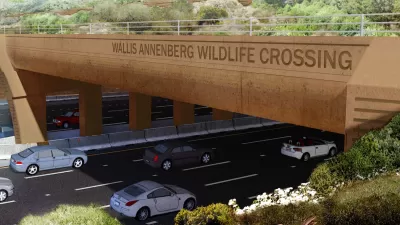
World's Largest Wildlife Overpass In the Works in Los Angeles County
Caltrans will soon close half of the 101 Freeway in order to continue construction of the Wallis Annenberg Wildlife Crossing near Agoura Hills in Los Angeles County.

California Grid Runs on 100% Renewable Energy for Over 9 Hours
The state’s energy grid was entirely powered by clean energy for some portion of the day on 37 out of the last 45 days.

New Forecasting Tool Aims to Reduce Heat-Related Deaths
Two federal agencies launched a new, easy-to-use, color-coded heat warning system that combines meteorological and medical risk factors.

AI Traffic Management Comes to Dallas-Fort Worth
Several Texas cities are using an AI-powered platform called NoTraffic to help manage traffic signals to increase safety and improve traffic flow.
City of Costa Mesa
Licking County
Barrett Planning Group LLC
HUD's Office of Policy Development and Research
Mpact Transit + Community
HUD's Office of Policy Development and Research
Tufts University, Department of Urban and Environmental Policy & Planning
City of Universal City TX
ULI Northwest Arkansas

Urban Design for Planners 1: Software Tools
This six-course series explores essential urban design concepts using open source software and equips planners with the tools they need to participate fully in the urban design process.
Planning for Universal Design
Learn the tools for implementing Universal Design in planning regulations.
