


After 9/11, when economic forces threatened Chinatown's survival, collaborative planning built consensus on where to go next.


Nothing about the history and culture of New York City's Chinatown prepared it to deal effectively with the catastrophe of September 11, 2001.
Ironically, Chinatown's inability to mobilize itself effectively was not due to a dearth of community organizations or underdeveloped social and political networks. The community had an abundance of both, but most organizations did not speak to one another and they certainly did not work together. Competition for funding, ideological and cultural differences, and turf wars all contributed to a history of factionalism within the neighborhood.
The challenge was to bring a historically fractious community together by putting aside old and recent rivalries and creating an atmosphere of trust. Beyond that, there was also a need to build consensus, forge collaborative partnerships and create a community-wide agenda to respond to the economic devastation created by this tragic event.
Thanks to David Holtzman
FULL STORY: Building Trust

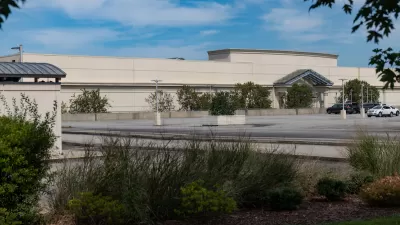
Pennsylvania Mall Conversion Bill Passes House
If passed, the bill would promote the adaptive reuse of defunct commercial buildings.
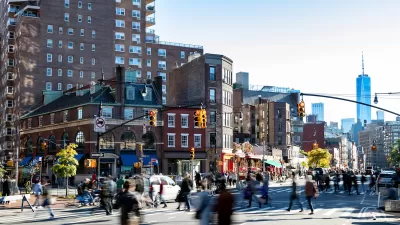
Planning for Accessibility: Proximity is More Important than Mobility
Accessibility-based planning minimizes the distance that people must travel to reach desired services and activities. Measured this way, increased density can provide more total benefits than increased speeds.
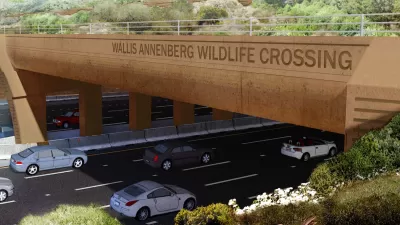
World's Largest Wildlife Overpass In the Works in Los Angeles County
Caltrans will soon close half of the 101 Freeway in order to continue construction of the Wallis Annenberg Wildlife Crossing near Agoura Hills in Los Angeles County.

Brightline West Breaks Ground
The high-speed rail line will link Las Vegas and the Los Angeles area.

Colorado Bans No-Fault Evictions
In most cases, landlords must provide a just cause for evicting tenants.

Alaska Village Becomes Test Case for Climate Change Relocation
The Yup’ik village of Newtok is the first Alaska community to begin a full-scale relocation necessitated by the impacts of climate change. Another 31 Alaska communities remain vulnerable.
City of Costa Mesa
Licking County
Barrett Planning Group LLC
HUD's Office of Policy Development and Research
Mpact Transit + Community
HUD's Office of Policy Development and Research
Tufts University, Department of Urban and Environmental Policy & Planning
City of Universal City TX
ULI Northwest Arkansas

Urban Design for Planners 1: Software Tools
This six-course series explores essential urban design concepts using open source software and equips planners with the tools they need to participate fully in the urban design process.
Planning for Universal Design
Learn the tools for implementing Universal Design in planning regulations.
