


Money Magazine's annual ranking of the best places to live highlights Americans' desire for big-city amenities, small-town charm, affordable housing, and green space.


Fort Collins, Colorado, has it all -- at least according to the editors of Money Magazine, who released their annual ranking of the Best Places to Live in the United States. Nestled high in the Rocky Mountains, the city of 128,000 people has good schools, low crime, high-paying jobs, and plenty of outdoor recreation opportunties -- all high on most Americans' wish list.
Other cities that made the list include Naperville, IL,, Scottsdale, AZ, Sugar Land, TX, Boise, ID, Columbia/Ellicott City, MD, and Cary, NC.
Among cities with a population over 300,000, Colorado Springs, CO was the winner. Runners-up include Austin, TX, Mesa, AZ, Raleigh, NC, and San Diego, CA.
FULL STORY: Best Places to Live 2006

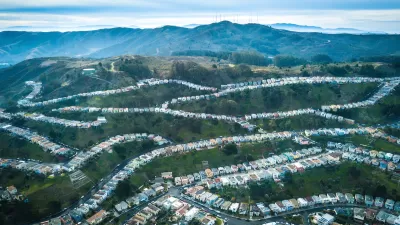
Depopulation Patterns Get Weird
A recent ranking of “declining” cities heavily features some of the most expensive cities in the country — including New York City and a half-dozen in the San Francisco Bay Area.
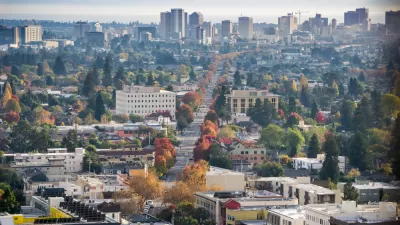
California Exodus: Population Drops Below 39 Million
Never mind the 40 million that demographers predicted the Golden State would reach by 2018. The state's population dipped below 39 million to 38.965 million last July, according to Census data released in March, the lowest since 2015.

Chicago to Turn High-Rise Offices into Housing
Four commercial buildings in the Chicago Loop have been approved for redevelopment into housing in a bid to revitalize the city’s downtown post-pandemic.

Google Maps Introduces New Transit, EV Features
It will now be easier to find electric car charging stations and transit options.

Ohio Lawmakers Propose Incentivizing Housing Production
A proposed bill would take a carrot approach to stimulating housing production through a grant program that would reward cities that implement pro-housing policies.

Chicago Awarded $2M Reconnecting Communities Grant
Community advocates say the city’s plan may not do enough to reverse the negative impacts of a major expressway.
City of Costa Mesa
Licking County
Barrett Planning Group LLC
HUD's Office of Policy Development and Research
Mpact Transit + Community
HUD's Office of Policy Development and Research
City of Universal City TX
ULI Northwest Arkansas
Town of Zionsville

Urban Design for Planners 1: Software Tools
This six-course series explores essential urban design concepts using open source software and equips planners with the tools they need to participate fully in the urban design process.
Planning for Universal Design
Learn the tools for implementing Universal Design in planning regulations.
