


Responding to a housing crunch, Manhattan volunteers will count all abandoned properties in the city this weekend in an effort to utilize any and all buildings available. The count is aimed at identifying new sites for affordable housing.


Finding housing in New York City is a difficult task. Locating a property within one's budget can be especially hard in one of the most expensive cities in the country. For those with literally no budget â€" the thousands in the city’s homeless population -- the challenge is practically insurmountable. As shelters fill beyond capacity, the city has planned a full-scale building count this weekend that hopes to identify all of Manhattan's abandoned or neglected buildings and create a pool of possible sites for affordable housing.
"The count comes at a time when the city has sold off all but 2,000 of the 100,000 units of derelict property it once controlled. Manhattan Borough President Scott Stringer hopes his count will help locate new sites for affordable housing. 'It’s about being able to go to the owner and say, ‘Hey, this is your situation and these are the programs and incentives that are available to you,’' he said. If the land is publicly owned, his office will contact the appropriate government agency. Stringer expressed hope that similar tallies may be undertaken in other neighborhoods and boroughs."
"Other cities, including Boston and St. Louis, have undertaken similar counts with a goal of reducing blight and encouraging the development of affordable housing. Boston does an annual street-by-street count of abandoned properties that covers most of the city. When housing agency staffers find buildings that qualify, they post the addresses online to urge neglectful owners to either use the buildings or sell them. Since 2000, the number of abandoned buildings in the city has dropped by 43 percent."
FULL STORY: DON'T JUST SIT THERE, SHELTER SOMEBODY


Depopulation Patterns Get Weird
A recent ranking of “declining” cities heavily features some of the most expensive cities in the country — including New York City and a half-dozen in the San Francisco Bay Area.
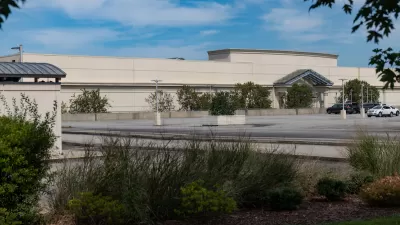
Pennsylvania Mall Conversion Bill Passes House
If passed, the bill would promote the adaptive reuse of defunct commercial buildings.
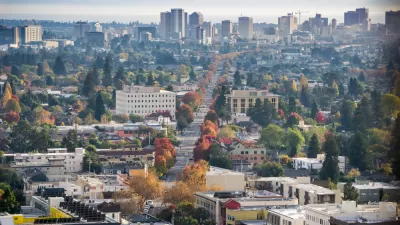
California Exodus: Population Drops Below 39 Million
Never mind the 40 million that demographers predicted the Golden State would reach by 2018. The state's population dipped below 39 million to 38.965 million last July, according to Census data released in March, the lowest since 2015.

Google Maps Introduces New Transit, EV Features
It will now be easier to find electric car charging stations and transit options.

Ohio Lawmakers Propose Incentivizing Housing Production
A proposed bill would take a carrot approach to stimulating housing production through a grant program that would reward cities that implement pro-housing policies.

Chicago Awarded $2M Reconnecting Communities Grant
Community advocates say the city’s plan may not do enough to reverse the negative impacts of a major expressway.
City of Costa Mesa
Licking County
Barrett Planning Group LLC
HUD's Office of Policy Development and Research
Mpact Transit + Community
HUD's Office of Policy Development and Research
City of Universal City TX
ULI Northwest Arkansas
Town of Zionsville

Urban Design for Planners 1: Software Tools
This six-course series explores essential urban design concepts using open source software and equips planners with the tools they need to participate fully in the urban design process.
Planning for Universal Design
Learn the tools for implementing Universal Design in planning regulations.
