


There are sound economic models for privately financed teams and venues, so why does government insist on subsizing stadiums?


In a column for The Baltimore Sun, Reason's Adam Summers writes that DC, and other cities, should not subsidize stadiums: "If there is a market for, say, a professional baseball team, and a savvy entrepreneur recognizes the opportunity, everyone wins: Consumers get a product they have been wanting and the owner makes a lot of money.
If there is not sufficient demand, yet the government subsidizes the investment anyway, there are few winners and many losers: A few consumers who really wanted the team may win, and the owner certainly wins big because he has put less of his money up in the first place. But the majority of taxpayers are big losers (particularly those who would not have paid to attend the games anyway). Rather than benefiting sports team owners at the expense of taxpayers, Washington should stay out of the sports and entertainment business completely. Sound economics show that there would be no real benefit to the city from subsidizing such an endeavor (and that there would likely be significant costs from doing so)."
Thanks to Reason Foundation Newswire
FULL STORY: Baseball boondoggle

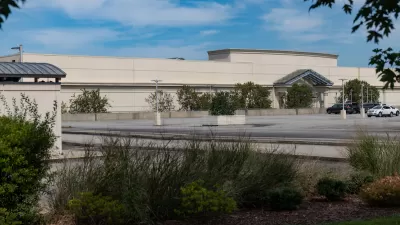
Pennsylvania Mall Conversion Bill Passes House
If passed, the bill would promote the adaptive reuse of defunct commercial buildings.
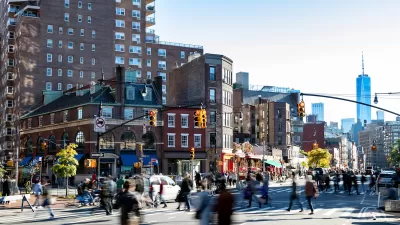
Planning for Accessibility: Proximity is More Important than Mobility
Accessibility-based planning minimizes the distance that people must travel to reach desired services and activities. Measured this way, increased density can provide more total benefits than increased speeds.
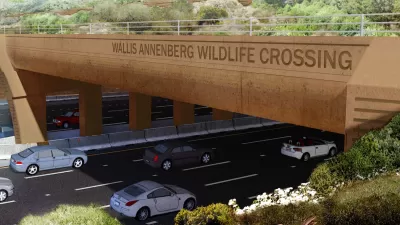
World's Largest Wildlife Overpass In the Works in Los Angeles County
Caltrans will soon close half of the 101 Freeway in order to continue construction of the Wallis Annenberg Wildlife Crossing near Agoura Hills in Los Angeles County.

Eviction Looms for Low-Income Tenants as Rent Debt Rises
Nonprofit housing operators across the country face almost $10 billion in rent debt.

Brightline West Breaks Ground
The high-speed rail line will link Las Vegas and the Los Angeles area.

Colorado Bans No-Fault Evictions
In most cases, landlords must provide a just cause for evicting tenants.
City of Costa Mesa
Licking County
Barrett Planning Group LLC
HUD's Office of Policy Development and Research
Mpact Transit + Community
HUD's Office of Policy Development and Research
Tufts University, Department of Urban and Environmental Policy & Planning
City of Universal City TX
ULI Northwest Arkansas

Urban Design for Planners 1: Software Tools
This six-course series explores essential urban design concepts using open source software and equips planners with the tools they need to participate fully in the urban design process.
Planning for Universal Design
Learn the tools for implementing Universal Design in planning regulations.
