


Can St. Louis survive in the Post-Industrial era?


"St. Louis was planned as the great metropolis of the American Midwest. It didn't turn out that way, but it wasn't for lack of qualifications. The city is perfectly located in the center of the nation on the banks of its largest river, in a region that experienced unabated growth for much of the 19th century. Its rise was, for lack of a better term, meteoric. Few cities were built as purely for the Industrial Age as St. Louis. That has made its fall equally meteoric... For the time being, smaller cities offer the advantages of cheaper rents and home prices, fewer work hours, less travel time, and the ability to become almost immediately involved in meaningful civic affairs. Perhaps they are on to something. A new 2003 report by the U.S. Census Bureau shows the St. Louis metropolitan area is attracting a growing number of people who are age 25 to 39, single, and possess at least a bachelor's degree, even as Missouri as a whole has seen a net exodus in this category."
Thanks to Chris Steins
FULL STORY: Gateway Bypass

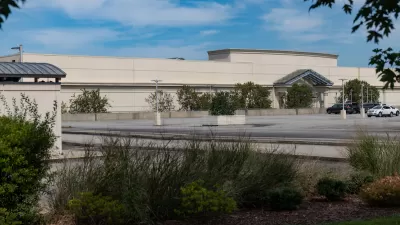
Pennsylvania Mall Conversion Bill Passes House
If passed, the bill would promote the adaptive reuse of defunct commercial buildings.

Planning for Accessibility: Proximity is More Important than Mobility
Accessibility-based planning minimizes the distance that people must travel to reach desired services and activities. Measured this way, increased density can provide more total benefits than increased speeds.
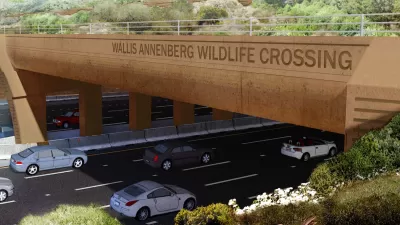
World's Largest Wildlife Overpass In the Works in Los Angeles County
Caltrans will soon close half of the 101 Freeway in order to continue construction of the Wallis Annenberg Wildlife Crossing near Agoura Hills in Los Angeles County.

Eviction Looms for Low-Income Tenants as Rent Debt Rises
Nonprofit housing operators across the country face almost $10 billion in rent debt.

Brightline West Breaks Ground
The high-speed rail line will link Las Vegas and the Los Angeles area.

Colorado Bans No-Fault Evictions
In most cases, landlords must provide a just cause for evicting tenants.
City of Costa Mesa
Licking County
Barrett Planning Group LLC
HUD's Office of Policy Development and Research
Mpact Transit + Community
HUD's Office of Policy Development and Research
Tufts University, Department of Urban and Environmental Policy & Planning
City of Universal City TX
ULI Northwest Arkansas

Urban Design for Planners 1: Software Tools
This six-course series explores essential urban design concepts using open source software and equips planners with the tools they need to participate fully in the urban design process.
Planning for Universal Design
Learn the tools for implementing Universal Design in planning regulations.
