


Just as a Superfund cleanup ended, the true extent of mining's legacy in northern Idaho is revealed -- 1,500 miles of the Coeur d'Alene River basin is contaminated.


In 1982, the Environmental Protection Agency declared 21 square miles around northern Idaho's old Bunker Hill lead smelter the nation's second-largest Superfund site. The EPA ha since spent $200 million digging up contaminated lawns, demolishing the smelter site and cleaning up the community. Just as the EPA was finishing its work, they discover that sediments contaminated with lead, cadmium, zinc and arsenic have spread far outside the original Superfund site. The contaminants have polluted up to 1,500 square miles of the Coeur d'Alene River basin, from the Montana border to the Columbia River in eastern Washington. The damage dwarfs previous cleanups attempted by the EPA. Adding insult to injury, the US Government is to blame for original mining pollution. Are there lessons here for California?
Thanks to Chris Steins
FULL STORY: A Deep and Wide Mining Scar in Idaho


Depopulation Patterns Get Weird
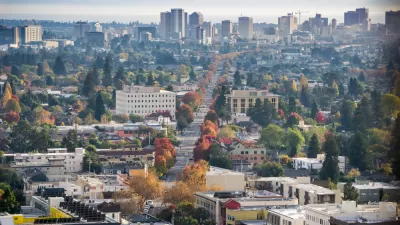
A recent ranking of “declining” cities heavily features some of the most expensive cities in the country — including New York City and a half-dozen in the San Francisco Bay Area.
California Exodus: Population Drops Below 39 Million
Never mind the 40 million that demographers predicted the Golden State would reach by 2018. The state's population dipped below 39 million to 38.965 million last July, according to Census data released in March, the lowest since 2015.

Chicago to Turn High-Rise Offices into Housing
Four commercial buildings in the Chicago Loop have been approved for redevelopment into housing in a bid to revitalize the city’s downtown post-pandemic.

Google Maps Introduces New Transit, EV Features
It will now be easier to find electric car charging stations and transit options.

Ohio Lawmakers Propose Incentivizing Housing Production
A proposed bill would take a carrot approach to stimulating housing production through a grant program that would reward cities that implement pro-housing policies.

Chicago Awarded $2M Reconnecting Communities Grant
Community advocates say the city’s plan may not do enough to reverse the negative impacts of a major expressway.
City of Costa Mesa
Licking County
Barrett Planning Group LLC
HUD's Office of Policy Development and Research
Mpact Transit + Community
HUD's Office of Policy Development and Research
City of Universal City TX
ULI Northwest Arkansas
Town of Zionsville

Urban Design for Planners 1: Software Tools
This six-course series explores essential urban design concepts using open source software and equips planners with the tools they need to participate fully in the urban design process.
Planning for Universal Design
Learn the tools for implementing Universal Design in planning regulations.
